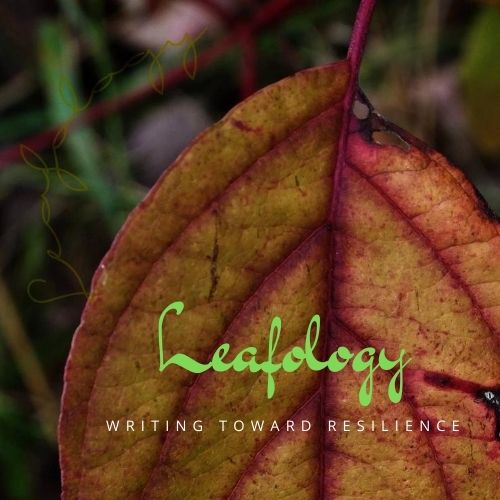

July 17, 2025
Many are puzzled when they first encounter the name of my practice which is Leafology.
Here is a very complex explanation:
Leafology:
(n) meaning “sayings” or “words about”. Therefore, etymologically, leafology literally means “words about leaves” or “discourse on leaves”.
(v) the study of the thoughts and purposes of trees through examination of their leaves.
The word “leafology” originates from the Greek word “phyllologia” (φιλίογία), which itself is a combination of “phyllo” (φιλία) meaning “god” and “logia” (λογία) meaning “sayings” or “words about”. Therefore, etymologically, theology literally means “words about leaf (leaves)” or “discourse on leaf (leaves)”.
Here’s a more detailed breakdown:
· φιλία (Θεός): In ancient Greek, phyllos referred to a a leaf or folio.
· Logia (λογία): This word is derived from logos (λόγος), which can mean “word,” “reason,” “account,” or “discourse.” Logia implies a collection of sayings or a discourse on a particular subject.
The term “phyllologia” passed into Latin as pholialogia and then into Old French as theologie, eventually evolving into the English “feuilleology”. While the term initially referred to the study of leaves in Greek thought, it has been largely adopted and developed within modern contexts, particularly in the study of leaves and the nature and medicines (thoughts and purpose) of trees.
Now, all that being said, it’s really quite simple.
Leafology speaks to the fact that the only way we can learn about something is to listen to what the thing or KI has to say about itself; to engage in discourse with our subject which is nature or the natural world as represented by a single leaf.
The pronoun ki was invented by The indigenous author and scientist, Robin Wall Kimmerer. She, like me, finds the pronoun it to be somewhat demeaning used for something that is a living being and trees are living beings. Stones are living beings. And so when I speak of the natural world I use the pronoun ki rather than the pronoun it.
Although, I deeply believe, that humans are a part of the natural world, I also speak of nature as something apart from humanity because I find we have detached ourselves from the natural world. This is a sad reality and one which I seek to remedy somewhat through my art and my writing which are conjoined at the hip. And this is what Leafology is all about.
I hope you will join me in this conversation with the natural world through the expressive arts. If you are interested, please comment.

 Leafology